JavaVCPU
JavaVCPU wiki
JavaVCPU is an experimental Java virtual machine with a byte instruction set, 128 KiB of banked, paged memory, a palette framebuffer, keyboard/mouse input, synthesized audio, and a persistent 16 MiB disk. JV-DOS 1.3 is its resident guest operating system, assembled into the same instructions that user programs execute.
Start with Getting started. Open Tooling and Disk Workshop to move host files onto a virtual disk, or Example programs to run your first program.
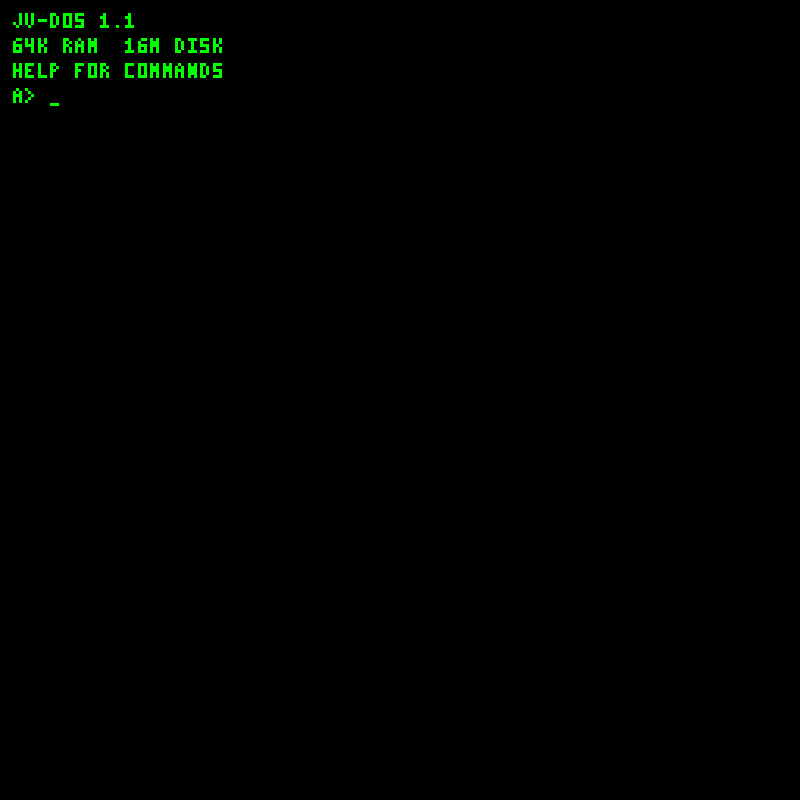
Browse Screenshots for every display view, media tool and Disk Workshop view.
| Guide | Contents |
|---|---|
| Screenshots | Boot, shell, help, editor, viewers, program output, graphics demos and Workshop |
| Getting started | JDK 26, builds, launching, boot flow, project map |
| Architecture | Registers, pages, display, input, audio and storage |
| Instruction set | All 29 opcodes and operand conventions |
| JV-DOS | Commands, editing, viewing files and media |
| JVS programming | Source syntax, arithmetic, loops and limits |
| COM programming | Raw guest bytecode and DOS service ABI |
| Tooling and Disk Workshop | Offline imports, conversion, exports and troubleshooting |
| Disk and media formats | Boot header, directory records, image/music formats |
| Example programs | Bare-metal and DOS examples with expected output |
These pages describe the current working-tree implementation. Names such as JVCPM, MicroDOS and DEMO_OS remain in source and boot messages; the interactive guest identifies itself as JV-DOS 1.1. This is a custom VM and guest OS: COM files contain JavaVCPU opcodes, and JVS is a small line interpreter.
Source: JavaVCPU repository. The repository stores these editable wiki sources in docs/wiki/ and programs in examples/.